A Discussion Site for Good Governance and Corruption in Public Life Issues in the British Overseas Territory of Anguilla in the West Indies, moderated by Don Mitchell CBE QC, of PO Box 83, Anguilla, British West Indies. Email me with your comments and contributions at: idmitch@anguillanet.com.
Selling the Crown Jewels on eBay.This woman tells a story that she could not have made up.
“I acquired this medallion in 1995. It came from accountant David Stevens of Rutland, VT. He got it from a diving expedition off the coast Anguilla. The claim had not even been filed yet, he did provide us the name of the ship and Captain. El Buen Consejo “70 guns”, headed by Julis de Urcullo. It sunk in 1772.
My boyfriend at the time, Scott Young, was working in construction, did a job for David and was rewarded for a job well done with 4 of these medallions. Scott gave one to me. I put mine in my banks safe deposit box, and it has been there ever since.
I have found reproductions of this medallion for sale from 80-600 dollars.”
Does anyone in Anguilla remember the terms on which David Stevens and Bull Webster and their friends were permitted to excavate the ruins of Anguilla’s most famous shipwreck?
Does anyone even care that Anguilla’s crown jewels are being sold on eBay?
Overseas Countries and Territories Association.Oscar Ramjeet has published an interesting article on the upcoming conference in Cayman Islands starting next Wednesday.From it, we learn that OCTA was designed in 2003 to provide a forum for the exchange of ideas and information for the mutual benefit of members.The Association exists to recommend action to member governments, develop effective working relations with European Union institutions, and to defend the collective interests of members.The Association has its own secretariat, and even a website. Anguilla is one of the 17 OCT members.
One of the most important topics for discussion is the future relationship between Anguilla and the other OCTs and the European Union.The EU has produced a green paper on the subject.It covers such areas as environmental issues, vulnerability, diversity, and the trade regime. Participants will learn how to apply for EU development funding for projects.It idea is to help us to become more efficient at preparing and submitting project proposals so that they will pass the appraisal and stand up to review as the projects are implemented. The Green Paper was released on 25 June.It was intended to spark public debate on how to modernize the EU’s relations with its 21 OCTs.The various aid and trade clauses governing our relations expire on 31 December 2013.
The big issues for us include hydrocarbon rights and responsibilities, use and regulation of our maritime economic zone, and the maintaining of responsible standards of public behaviour.
Neither the Green Paper nor the upcoming conference may, strictly speaking, be matters for the British government to bring to our attention.Their interest is to keep us in the OTs docile and quiet.But, surely, our own government ministers and senior civil servants, who have been circulated by the EU with all the relevant documents, ought to be discussing them publicly?Why are they not putting the documents and discussion papers on their useless and boring Anguilla government website so that we can be made aware of the issues that will affect Anguilla?
Are we going to be represented at the conference?If so, how do our representatives know what we think about the subject, since they have never submitted the Green Paper, or any of the topics to us for discussion.What mandate do they think they have to make any kind of presentation on our behalf?None!They have not even issued the usual pre-conference press release.The plan is probably not to tell us about it until it is all over.
None of these issues have been or are being discussed in Anguilla.
No journalist or opinion maker in Anguilla has ever expressed any interest in these matters, or has even demonstrated an awareness that they exist.
The public remains in the dark as usual.
The screams of “foreign exploitation” and “imperialist domination” will rise to a crescendo only when the decisions that we neglected to join in formulating really begin to bite.
What Happened to Baccarat Anguilla?Andrew Calvo has a US commercial real estate developer’s take on the latest developments at Flag in Anguilla.Anguillian readers may be interested in what he has to say.He writes on his blog today:
“I’ve been noticing an uptick over the past 30 days from visitors who have viewed my blog while searching for information on the Baccarat Hotel located within the Temanos Anguilla development project. Normally a story that I wrote months ago wouldn’t receive much interest day after day like this one has. It got me thinking though - what is going on with this project?
Originally announced in January of 2008, it was supposed to be the hotel component of Flag Luxury Properties Temenos Anguilla resort property. Originally to be branded as a St Regis (when the project was announced in 2004) it apparently ended up being changed to a Baccarat Hotel & Residences location. The hotel was supposed to be finished by the end of the year - but from what I’ve heard from a few locals who have emailed me, it’s nowhere near being finished (can someone update me on that fact?).
Once the initial announcement was made a website immediately went live - www.baccaratanguilla.com, and I expected to see over time additional components added to it - pictures, descriptions, condo layouts - but instead the website went completely inactive over the summer. Additionally, the BaccaratHotels.com page redirected to the main Temanos Anguilla website rather than the BaccaratAnguilla.com site. Now, the BaccaratHotels.com site doesn’t even link to or mention anything about Baccarat Anguilla. The Temanos Anguilla website now has no mention of the Baccarat branded hotel, all references to it have been removed.
What happened?
Barry Sternlicht and Robert FX Sillerman - the principal behind Flag Luxury Properties have a history of working together on projects. Barry was still a part of Starwood Hotels when the St Regis was initially announced for the Anguilla project, and they are both principals in Riv Acquisition Holdings - the company that owns a portion of and is trying to take over the Riveria Casino in Las Vegas, so its not like Baccarat and Flag Luxury had a relationship like most other developers/hotel companies.
I was all set to just write this off to another casualty of the problems with getting credit - Starwood Capital isn’t exactly going gangbusters opening up their new brands like they were initially expected too - but then I came across a comment posted to my blog earlier today which inferred that the project has financial difficulties - with the management some how misleading the property owners about some aspect of the project. (Maybe that the centerpiece component a Baccarat Hotel will no longer be a part of the development?)
So it still could be a simple issue due to the credit crisis, or it could be a more underlying issue with the way business is being conducted at the property (which I hope is not the case - since Flag Luxury is a reputable company).
No matter what the real reason is - it sounds like Baccarat is permanently out of the equation for the Anguilla property, and the actual completion of the property will not occur as scheduled for late 2008. As for why I’ve been getting so many visits related to the Baccarat Anguilla post - its could be related to the lack of news on a project that property owners have already made deposits for.
We’ll see what the future holds for this property.”
Little does he know what a disaster it all is.And, it all happened long before the present downturn in the economy. It has to do with bad planning, the bane of all development in Anguilla today. Bad planning in every sense of the word. Bad management follows closely on the heels of bad planning in explaining what happened at Flag.
We shall see if this project has any future at all.
Meanwhile, the bush is rapidly growing back over the recently abandoned golf course.
Coastal and Marine Ecosystems and the National Biodiversity Strategy and Action Plan.That is the title of a new press release from the Department of the Environment concerning our coastal and marine environment.They are to be congratulated on listing some of the problems.
"But marine and coastal biodiversity is under threat: habitats are being destroyed to make way for buildings; water is being polluted by sewage seepage and dumping, sand is being mined, bays are being dredged, anchors are being dropped on corals; reefs and seagrass beds are being suffocated by excessive algal growth and sediment from land and beach erosion; fish stocks and other marine organisms are being over-exploited; and the health of the island all of its inhabitants are being compromised."
The article jumps around a lot, and doesn’t really reach any conclusion.I think what it says is that “greater awareness”, and the publication of an underwater guide, are going to stop the people who are destroying our environment. I am not sure.
Because sand mining was causing acute problems at many of our beaches, certain areas were designated as protected beaches.This, of course, left other beaches Unprotected, resulting in the total destruction of SileBay and WindwardPointBeaches.The protected beaches are not even protected by prosecuting those who steal sand from them.We do not want to criminalise good God-fearing Anguillians.As a result, you can find trucks collecting sand from the beach and dune at CoveBay almost every day, if you go early enough.
After our Revolutionary leaders wisely chose the dolphin as our national symbol, we allowed and encouraged a Mexican company to imprison and exploit them in Anguilla for profit.
There are some who believe that we need to pray for the sand miners to bring them to righteousness.Still others believe that greed can be stopped by education.When well we admit that these procedures have failed?We need to do things that are effective.We need to enforce our existing laws.
The Hole.Just south of the power station at Corito, there is a very large hole that was excavated when a million cubic yards of fill were needed for the airport extension project. The hole, known by the construction workers as "The Hole," used to contain a million cubic yards of fill, before it was a hole. If my numbers are correct, it is a million cubic yard hole.
Shortly before the 2005 election, there was speculation about The Hole and its effect on The Valley Aquifer. Government outsourced information about The Hole to opposition candidates and allowed misinformation, lies and stupidness to circulate freely for several months. Then, a spokesman for the United Front announced on the radio that the Party had an innovative solution for The Hole, but they were not free to talk about it until after the election. I don't make this stuff up; I heard it with my two ears.
That was three years ago. The Hole sits there pretty much unchanged except you can no longer see the water at the lowest point because it's been covered with garbage, including toxic waste such as old batteries and television sets, slowly leaching into the aquifer.
Is it time for a change in Anguilla, or is it only for the USA?
Only a few short months for Anguillians to make up their mind where they are going.
The most corrupt BritishOverseasTerritory.That is the unenvious reputation that the Turks and Caicos Islands have enjoyed internationally over the past thirty years.Yet, the Foreign and Commonwealth Office kept saying for years that there was no evidence of any wrongdoing at the top of the TCI government.They refused to investigate any of the complaints that were made to it by citizens.“Unless you produce the evidence, we will not look into your complaints to see if there is any evidence”.That was their mantra year after year.Meanwhile, the citizens of the TCI observed their islands being sold out from under their feet.
Now that the Foreign Affairs Committee has basically ordered the FCO to investigate the allegations, Sir Robin Auld has been appointed for that purpose.He has been calling on the TCI public to produce evidence to his committee.He has requested Ministers to disclose and reveal all their assets.They have been playing hard to get, and refusing to cooperate with him.He has now announced that he will be summoning the Premier and his Ministers before him to give evidence on oath.That means that the penalties for perjury will apply, if they do not tell the truth.
Things are now hotting up. It seems that what the Europeans call “Higher Supervision” is about to be imposed on the TCI.The latest news is that two British administrators are being sent to oversee all financial operations of the incumbent government until further notice.
The Premier has already for the year allocated as much money for hiring a plane for his travel as he has for hurricane relief.It has been suggested that the provision of these two British administrators is a direct result of “voodoo economics” practised by the Premier and his Deputy.It has even been suggested that the British should dismiss the elected government and appoint an Interim Government as soon after publication of the Commission’s pending report as practicable, if not before.
Are yu, look a wuk!
Or, our Cruzan friends would say,“What a pistarkle!”
When a senior Civil Servant stands up for right, we should all stand up for her.The UK has produced a Report that contains critical information on a wide range of children’s issues, including child abuse.The Report is titled The Risk and Vulnerability Facing Children.It was designed for all the OverseasTerritories as part of the UK’s commitment to comply with its Rights of the Child Convention obligations across its territories.The Report included a strategic plan for dealing with the issues.It was submitted to all the OverseasTerritories in March 2007.
As usual with all important social reform initiatives that were not thought up by a politician, the Report appears to have fallen into the black holes that exist at all our Ministries of Health.
Last September, the BritishOverseasTerritories were asked to provide a status report on the implementation of their strategic plans to carry out the recommendations of the Report.Anguilla is one of those territories.Child abuse and neglect is no less a serious and widespread problem in Anguilla than it is in the Cayman Islands.
I wonder whether Anguilla was honest enough to admit that no action has taken place since the Report was submitted.But, we shall never know.That information is, as usual, confidential.
Deanna Look Loy of the Cayman Islands is one brave woman.She is their Child and Family Services Director.She had been calling in vain on her Ministry of Health to implement the Report. To date she has not received a reply.Then she began demanding that immediate action be taken by the Child and Family Services Department to implement the Report.Still no response. Now, she has gone public.
Deanna Look Loy
You might say that she has ratted on her Permanent Secretary.
If she was a senior public servant in Anguilla, she would have been transferred to our equivalent of the Gulag by now.
The cynical would say that Ms Look Loy must be very close to retirement age for her to dare do such a thing. Her photograph shows that nothing could be further from the truth. She is just one brave woman.
Free specialist medical treatment in the UK?I always thought it was a bit cheeky of us.A year ago, at a meeting of Chief Ministers and FCO officials in London, our Chief Minister delivered a paper, “Access to UK Health Care”.We have previously been granted the privilege of sending up to five persons unable to obtain specialist medical treatment in Anguilla to England to get it free of cost.That means at the cost of the English taxpayer.It appears that we were not satisfied with that number.The Chief Minister was calling on the FCO to pay for that number of patients to be substantially increased for Anguilla. If you do not remember, you can read all about it in the Anguillian Newspaper.
There are many Anguillian patients who need specialist medical treatment that is not available in Anguilla.Such treatment is almost certainly available in nearby Barbados or Puerto Rico.England seemed a bit far to go.And, why were we asking the British taxpayer to fund our medical bills?I could not understand.Surely, it would have been more appropriate for our taxpayers to fund deserving cases?And, why not send our medical patients that we are paying for to Puerto Rico or Barbados for treatment?The convenience of the shorter travel distance, and the probability of the cost being no greater, seemed to me to be the clinchers in the argument.
Anyway, I heard nothing more about the issue.The Chief Minister came back from London and reported that the British Minister of Health was looking into it.Well, it seems we got our answer in the House of Commons yesterday.As Dawn Primarolo, Minister of Health, explained, there is no limit to the amount of Anguillians allowed to travel to the UK for health care.But, they must stand in line and pay for it like any other overseas visitor. Nor are there any plans on the part of the UK government to review the quota of patients that Anguilla can refer to the UK.Quite right too!Any Minister who answered otherwise should be fired immediately.Any political party that authorised her to answer otherwise should be dismissed from government at the next elections.It seemed pellucidly clear to me.
If it were to be otherwise, I have a proposal for ensuring reciprocity and saving our pride.We in the wealthier OverseasTerritories such as Anguilla ought to invite impoverished English medical patients to spend time in our sunshine to help them to recover their health faster.After all, it is free for us.It does not cost us anything to share it.We might as well throw in the airfare and board and lodging for the duration of their stay.All paid for by the Anguillian taxpayer, of course.And, let us see how that suggestion would fly with the Anguillian taxpayer.
National Bank of Anguilla.The only bank I bank with is NBA.NBA is my bank.So, whatever I write that might appear critical is to be taken as but a child reproaching a parent.
I have been following a story recently.The story is officially about banking secrecy.More importantly, it is about the competence and reliability of West Indian banks.The part of the story that interests me is about NBA. The author claims that he had emailed various West Indian banks with the following question:
“Dear bank rep,
I have some questions about banking secrecy at your bank. I hope you’ll be glad to answer them. Here they are:
Under what conditions will the bank share information on its clients?
Does there have to be a government investigation underway? Does that matter?
If so, who can conduct this investigation?
Does it take a court order? Is an official request good enough?
Thanks and I hope you’ll answer my questions as best you can.”
He says that only two of the several banks in the West Indies that he wrote, particularly Griffon Bank of Dominica and Caye Bank of Belize, replied.National Bank of Anguilla, among others, did not respond.He writes:
“The rest of the Banks I contacted have not answered because, as everyone knows, it’s very hard to answer an e-mail if you’re only given one week. Or maybe they’re just lazy or don’t know how to type and click buttons, or they’re just not very service oriented or non-client friendly …or the benefit of the doubt:they’re so used to keeping their mouths shut that they did not answer my e-mails.”
I do not mind that he is talking about Grenadian or Antiguan banks.I do mind that he is talking about my bank.
The answers to his question were not difficult.One only had to be honest.One correct reply would have been:
"Who would be so naïve as to believe today that there exists any such thing as banking secrecy? It was approximately ten years ago that Switzerland surrendered banking secrecy to the US State Department. That was the end of banking secrecy internationally.Only banks set up with the specific intention of stealing our money still promise secrecy. The higher the level of secrecy offered by an offshore bank, the more confident the offshore “bank” will be that you will not complain when they disappear with your money."
Why would it have been so difficult to explain such a basic fact to a correspondent?Better by far to be accused of excessive compliance with intrusive regulation than of incompetence or laziness, I would have thought.
The AbbeySchool, Mount St Benedict, Trinidad. That is where I went to primary and secondary school from the years 1955 to 1964. The monks tried very hard to make me a Christian. They succeeded while I was a boy. And then, as St Paul admonishes us, I became a man and I put aside childish things.
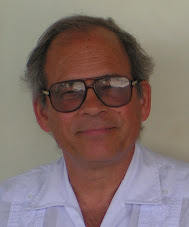
Don as an Abbey School student
Last weekend, we had our second school reunion since I left Trinidad in 1964 to continue my studies.
If you have ever driven from Piarco to Port-of-Spain, you may have seen my old School on the hillside in the NorthernRange above Tunapuna village. The white painted structures stand out as clearly as a beacon against the green hills. Even Fidel Castro noticed them as he drove past when he came to Trinidad in 1958, and could not resist a visit. I remember him, bearded and wearing his military fatigues, and all of us little boys standing waving on the road side in awe of the great man.
The Abbey School as it looked when I was there
It was good to see the old buildings again after the passage of nearly fifty years. We were permitted to visit the school on Saturday morning. Guided by management, we explored every room and passageway. The institution is now turned over to serving as a drugs rehabilitation centre. It has finally found a socially redeeming purpose, you might say.
School building from the basket ball court
Front of the school
The front corridor of the school
Roof over the Small Boys' Dorm
The view over the Caroni Plain was as breathtaking as I remembered it.
View south from first floor corridor
The Abbey viewed from the Clinic
The forest around the school was my playground. Six strokes on my backside with a cane every Monday morning at 9:00 am for five years was my punishment for refusing to have anything to do with cricket and the cricket field. Instead, I spent the free time running wild in the bush.
White Stones on the left, with Mt Tabor on the right in the distance
Forest to the north-east of the school
The oldest of the climbers among us was seventy-three years old. I knew I was a spring chicken by comparison. The plan was to climb up to White Stones, the mountain that towers above the school.
The Abbey seen through the trees on the way to White Stones
Sitting on a white stone at White Stones
Conquerors of White Stones
Finally, we found the ruins of the original Monastery at Mt Tabor, high up above White Stones.
Don leaning on the foundations of the abandoned Monastery at Mt Tabor
Kitchen oven at Mt Tabor ruins
On the Sunday, the Khans entertained us all to a picnic lunch at Mayaro Beach. I was particularly charmed by the sight of a column of demure Indian girls wading out to sea in their saris, casting fruit and flowers about them as they went. A fertility ritual, I imagined. Personally, at my age, I am only capable of considering Lashmi in her aspect of Kali, the old crone, the goddess of destruction!
Offerings from a Hindu fertility ritual at Mayaro Beach
More offerings
“Sic transit gloria mundi”, as Thomas a Kempis warned in his memorable Imitatio Christi. I must have been about twelve when I read the translation.
And, “Never be entirely idle: but either be reading, or writing, or praying, or meditating, or endeavouring something for the public good”.